The Jarrow March/Crusade (5th-31st November, 1936)

On 5th October, 1936, approximately 200 men set out from the Tyneside town of Jarrow to march 300 miles to London, in protest against the mass unemployment and poverty that had beset their town. For the most part, they were accompanied by their local MP. Ellen Wilkinson - the only woman to participate on the march - who passionately championed their cause.
During the 1930s, following WWI, there was a world-wide recession. One of the worst hit areas was the industrial towns of northern England. Jarrow had grown and prospered around two large successful traditional industries: coal mining and shipbuilding. By the 1850s, the more easily accessible seams of coal had diminished, and, as it became more unprofitable to mine, the coal fields were abandoned. Coal mining was replaced by the shipbuilding industry. In 1852, Palmer’s shipyard was launched. Within a few years it became the largest shipbuilding plant in the country, employing thousands of men and boosting Jarrow’s economy. It supplied many great warships for the British war effort.
However, after the war, demand died and Palmer’s declined. It went into receivership, and eventually closed in 1934. There was no alternative employment on offer for the redundant workers, and with little government interest or assistance, unemployment soared and standards of living for the workers - which was never particularly sanitary in any case, often lacking in running water and drainage - dropped to an all-time low. (There was unemployment benefit at the time, but it lasted for only 26 weeks. Thereafter, payments were means tested, whereby all family members income was taken into account. This was hugely unpopular, and resented by the male ‘breadwinners’.)
In the 1935 general election, Ellen Wilkinson became MP for Jarrow. She won by a huge majority. She did not waste any time in arguing the case for her impoverished constituents, and pleaded for some kind of government intervention: ‘These are skilled fitters, men who have built destroyers and battleships and the finest passenger ships...The years go on and nothing is done...this is a desperately urgent matter and something should be done.’ She later testifies in her book, The Town that was Murdered: 'There was no work. No one had a job except a few railwaymen, officials, the workers in the co-operative stores, and a few workmen who went out of the town... the plain fact [is] that if people have to live and bear and bring up their children in bad houses on too little food, their resistance to disease is lowered and they die before they should.'
As time went on, there were no substantial improvements made and conditions worsened for the people of Jarrow. The idea of a march was put forward by the chairman of Jarrow Borough Council. 200 fit men were to march to London, just in time for the beginning of the new parliamentary session, whereby Wilkinson would present a petition to the House of Commons. A fund was set up to meet the costs of the march, and public meetings which would publicise the plight of the marchers were planned for the overnight stops. (At the time, ‘hunger marches’ like this were quite common. A group of unemployed workers would confront parliament in the belief that it would help improve their condition. The Labour party and the TUC generally did not get involved, for fear of being accused of inciting communist - revolutionary - activity.)
The Jarrow marchers arrived in London at the appointed time, and Wilkinson presented the petition to the House of Commons with over 11,00 signatures. The petition proposed: ‘His Majesty’s Government and this Honourable House should realise the urgent need that work should be provided for the town without further delay.’
However, the march was largely ineffectual. Although the march received huge publicity, and the marchers themselves gained sympathy and public support, material conditions did not improve for the people of Jarrow. The depression continued until the outbreak of WWII, when industry once again prospered due to the country’s need for rearmament.
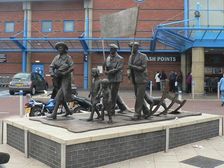
Despite it’s lack of success at the time, The Jarrow March - also known as The Jarrow Crusade - is subsequently looked upon as an iconic event in the history of organised labour. Rather than succumbing to the unfortunate circumstances of their lives, the people of Jarrow took it upon themselves to join together in active defiance against an apathetic government. They were successful in that they raised consciousness about the plight of the poor and the downtrodden: ultimately, paving the way for social reform.
Read more about Ellen Wilkinson
During the 1930s, following WWI, there was a world-wide recession. One of the worst hit areas was the industrial towns of northern England. Jarrow had grown and prospered around two large successful traditional industries: coal mining and shipbuilding. By the 1850s, the more easily accessible seams of coal had diminished, and, as it became more unprofitable to mine, the coal fields were abandoned. Coal mining was replaced by the shipbuilding industry. In 1852, Palmer’s shipyard was launched. Within a few years it became the largest shipbuilding plant in the country, employing thousands of men and boosting Jarrow’s economy. It supplied many great warships for the British war effort.
However, after the war, demand died and Palmer’s declined. It went into receivership, and eventually closed in 1934. There was no alternative employment on offer for the redundant workers, and with little government interest or assistance, unemployment soared and standards of living for the workers - which was never particularly sanitary in any case, often lacking in running water and drainage - dropped to an all-time low. (There was unemployment benefit at the time, but it lasted for only 26 weeks. Thereafter, payments were means tested, whereby all family members income was taken into account. This was hugely unpopular, and resented by the male ‘breadwinners’.)
In the 1935 general election, Ellen Wilkinson became MP for Jarrow. She won by a huge majority. She did not waste any time in arguing the case for her impoverished constituents, and pleaded for some kind of government intervention: ‘These are skilled fitters, men who have built destroyers and battleships and the finest passenger ships...The years go on and nothing is done...this is a desperately urgent matter and something should be done.’ She later testifies in her book, The Town that was Murdered: 'There was no work. No one had a job except a few railwaymen, officials, the workers in the co-operative stores, and a few workmen who went out of the town... the plain fact [is] that if people have to live and bear and bring up their children in bad houses on too little food, their resistance to disease is lowered and they die before they should.'
As time went on, there were no substantial improvements made and conditions worsened for the people of Jarrow. The idea of a march was put forward by the chairman of Jarrow Borough Council. 200 fit men were to march to London, just in time for the beginning of the new parliamentary session, whereby Wilkinson would present a petition to the House of Commons. A fund was set up to meet the costs of the march, and public meetings which would publicise the plight of the marchers were planned for the overnight stops. (At the time, ‘hunger marches’ like this were quite common. A group of unemployed workers would confront parliament in the belief that it would help improve their condition. The Labour party and the TUC generally did not get involved, for fear of being accused of inciting communist - revolutionary - activity.)
The Jarrow marchers arrived in London at the appointed time, and Wilkinson presented the petition to the House of Commons with over 11,00 signatures. The petition proposed: ‘His Majesty’s Government and this Honourable House should realise the urgent need that work should be provided for the town without further delay.’
However, the march was largely ineffectual. Although the march received huge publicity, and the marchers themselves gained sympathy and public support, material conditions did not improve for the people of Jarrow. The depression continued until the outbreak of WWII, when industry once again prospered due to the country’s need for rearmament.
Despite it’s lack of success at the time, The Jarrow March - also known as The Jarrow Crusade - is subsequently looked upon as an iconic event in the history of organised labour. Rather than succumbing to the unfortunate circumstances of their lives, the people of Jarrow took it upon themselves to join together in active defiance against an apathetic government. They were successful in that they raised consciousness about the plight of the poor and the downtrodden: ultimately, paving the way for social reform.
Read more about Ellen Wilkinson
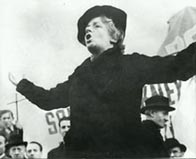
Ellen Wilkinson
|
|